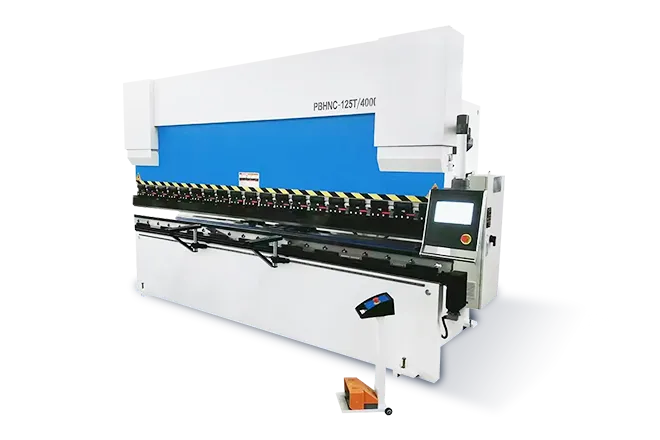
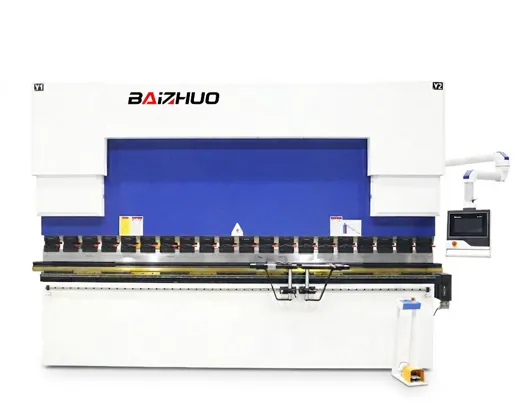
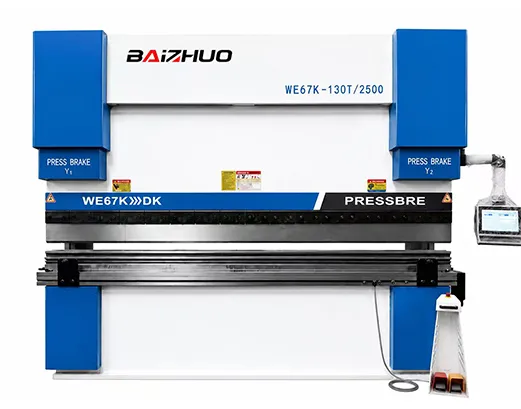
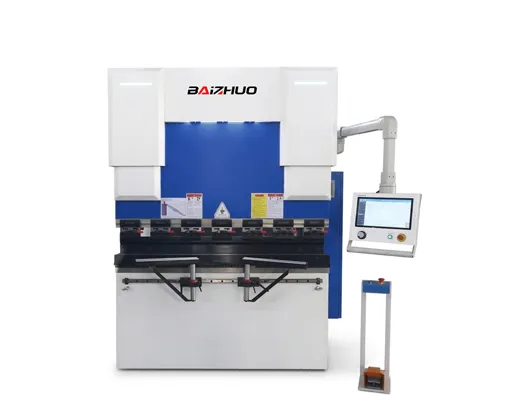
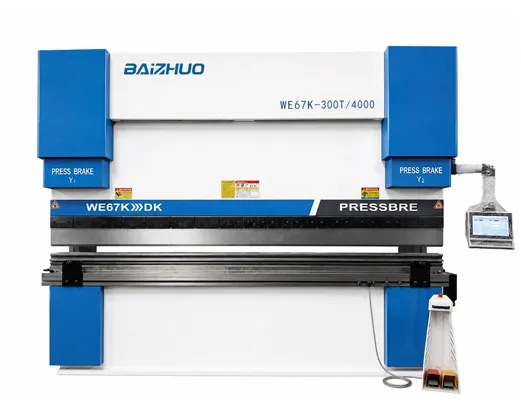
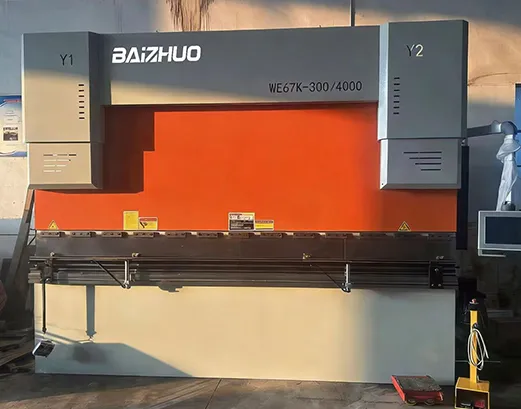
Press brake operation is the process of setting up, positioning, and bending sheet metal with a punch and die to form accurate angles and shapes. In modern fabrication shops, it is one of the most important skills for producing brackets, panels, enclosures, frames, and structural parts with repeatable quality.
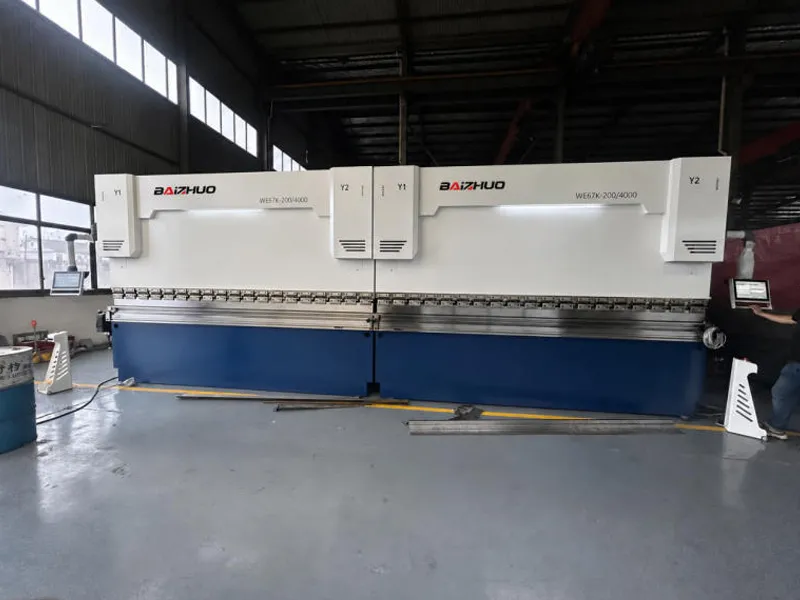
As production demand rises, manufacturers need press brake operation that is not only accurate, but also fast, safe, and easy to repeat. That is why CNC press brakes have become the standard choice in automotive, electrical cabinet, renewable energy, construction machinery, and general sheet metal fabrication. Baizhuo CNC provides hydraulic and CNC press brake solutions designed to support stable bending performance, efficient setup, and multi-bend production.
What Is Press Brake Operation?
Press brake operation refers to the full process of preparing the machine, installing tooling, positioning the sheet, performing the bend, and checking the finished part. It includes both machine setup and practical bending steps, so the operator can produce parts that match the drawing.
A press brake works by applying controlled force through the ram, which pushes the punch into the die opening. The sheet metal bends along a straight line, and the final angle depends on material thickness, tensile strength, die opening, punch shape, and bending method. Because the process uses plastic deformation rather than cutting, the material keeps its original strength while taking on a new shape.
Pre-Operation Inspection
Before starting a bending job, operators should verify that the machine, tooling and production environment are ready. A proper inspection prevents quality issues and reduces unexpected downtime.
The first step is checking the overall condition of the press brake, including the hydraulic system, electrical components, lubrication points, emergency stop functions and safety devices.
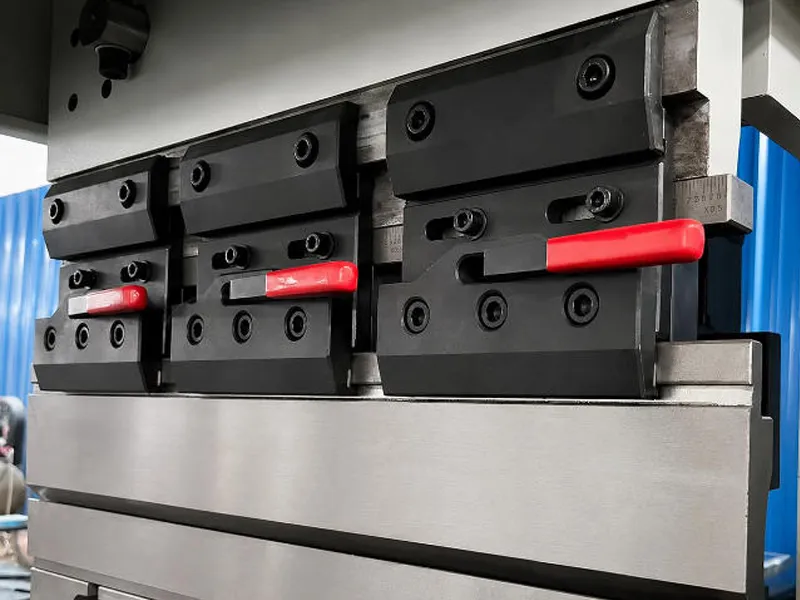
The tooling should also be inspected carefully. Damaged punches or dies may create inaccurate angles, surface marks or uneven loading. The selected tooling must match the material thickness, required bending radius and expected bending force.
Operators should also confirm that:
The CNC program matches the correct part drawing;
The material specification is correct;
The back gauge reference position is accurate;
The work area is clean and free from obstacles.
For hydraulic press brakes, checking hydraulic oil condition and abnormal leakage is especially important because unstable hydraulic performance can affect ram movement and bending consistency.
How to Set Up the Punch, Die and Back Gauge
Correct setup is one of the most important steps in press brake operation. Even a high-performance machine cannot produce accurate parts if tooling and positioning are incorrect.
The punch and die combination should be selected according to the required bend angle, material thickness and inside radius. A larger V-die opening generally reduces required bending force, while an unsuitable die opening may increase tonnage demand or cause deformation.
After installing the tooling, operators need to confirm alignment between the upper and lower tools. Poor alignment can lead to uneven bending angles and premature tooling wear.
The back gauge system controls the position of the sheet before bending. Simple applications may use basic positioning, while advanced CNC press brakes can use multiple axes to control different flange dimensions and complex part geometries.
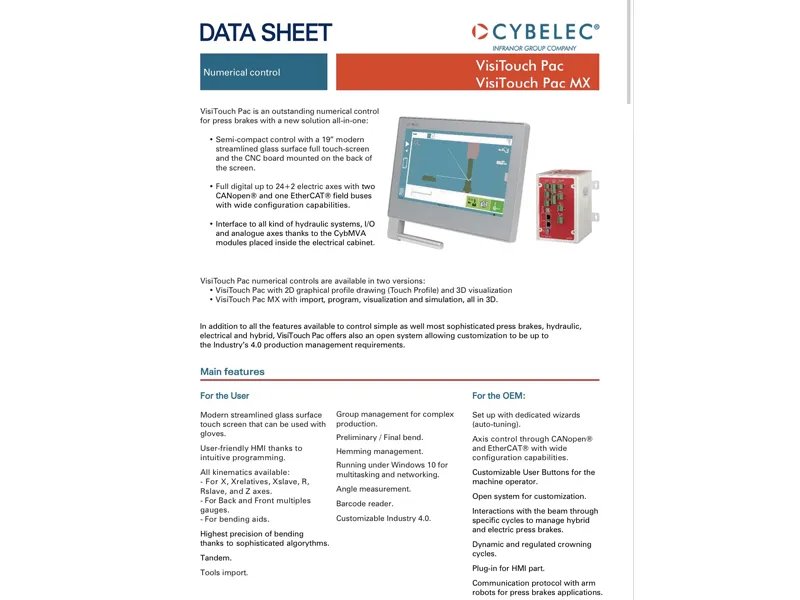
Modern CNC systems allow operators to store tooling information and bending parameters, reducing repeated manual setup. Baizhuo CNC press brakes can be configured with programmable back gauge systems and different CNC controllers to support efficient production of multi-step bending components.
Step-by-Step Press Brake Bending Process
A stable bending process follows a structured sequence rather than relying only on operator experience.
1. Review the Part Drawing and Bending Sequence
Before bending, engineers should analyze the part geometry, bending order, flange dimensions and possible tooling interference.
For complex components, the bending sequence should be planned carefully to avoid collisions between the workpiece, tooling and machine structure.
2. Load and Position the Sheet Metal
The operator places the workpiece against the back gauge fingers and ensures stable positioning before starting the cycle.
For large sheets or heavy plates, proper material support is important because the weight of the workpiece can affect positioning accuracy.
3. Execute the Bending Cycle
During operation, the ram moves downward and applies controlled force through the punch and die system.
The CNC controller manages ram position, back gauge movement and programmed bending parameters. Advanced machines may also use crowning compensation to reduce angle variation caused by machine deflection.
Baizhuo CNC press brakes are designed for stable hydraulic operation and repeatable multi-bend production, helping manufacturers maintain consistent results across different production batches.
4. Measure and Adjust
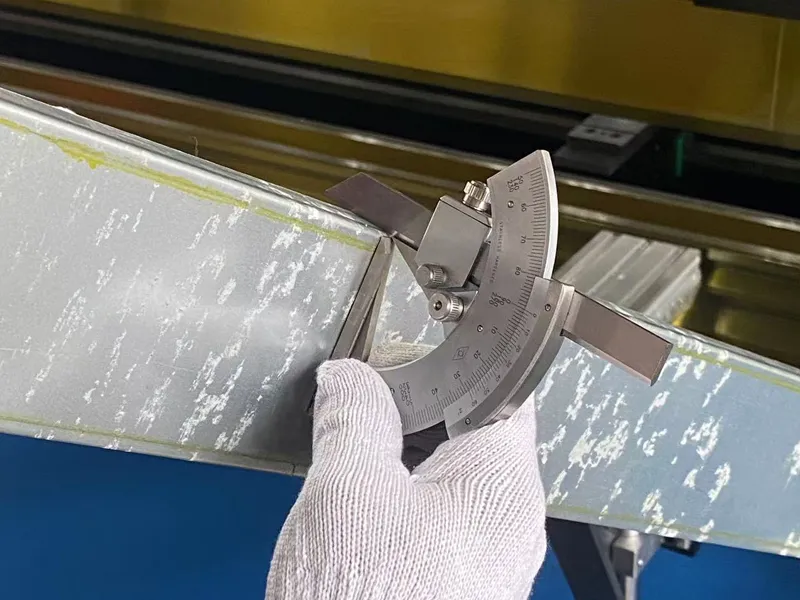
After the first bend, the operator should verify the actual angle and dimensions before continuing mass production.
If necessary, the program parameters can be adjusted to compensate for material springback or dimensional deviation.
How to Check the First Bent Part?
The first bent part is the most important quality check in the entire process. It confirms whether the machine setup, tooling, angle compensation, and back gauge position are correct before full production begins.
The operator should measure the bend angle, flange length, and overall part geometry against the drawing. If the angle is off, the program or punch depth may need adjustment. If the flange length is incorrect, the back gauge position should be corrected. Because springback varies by material and thickness, the first part often needs a small adjustment before the batch run starts.
Common Operating Mistakes
One common mistake in press brake operation is selecting the wrong tooling for the material or bend radius. Another is ignoring springback, which can lead to parts that are outside tolerance even when the machine appears to be running correctly.
Operators also sometimes forget to confirm the back gauge position before loading the sheet. This can cause dimensional errors that repeat across the whole batch. Poor communication between programming and setup is another frequent issue, especially when the part drawing includes multiple bends, tight tolerances, or asymmetric shapes.
Press Brake Safety Checklist
Press brake safety should be considered throughout the entire production process, not only during machine operation. Operators should always follow the machine manufacturer’s safety instructions and workplace regulations.
Important safety practices include:
Verify safety devices before operation;
Keep hands away from the punch and die area;
Use appropriate handling equipment for heavy sheets;
Avoid bypassing guards or protective systems;
Follow proper maintenance and lockout procedures.
For international buyers, safety configuration should also be part of supplier evaluation. A reliable press brake manufacturer should provide proper documentation, training support and guidance for safe operation.
Frequently Asked Questions
How long does it take to set up a press brake?
Setup time depends on part complexity, tooling requirements, machine configuration and operator experience. CNC press brakes with stored programs and automatic positioning can significantly reduce setup time for repeat jobs.
Why does my press brake produce different bending angles?
Angle variation may result from material differences, incorrect tooling, machine deflection, insufficient compensation or inaccurate setup parameters.
What is the most important factor in press brake operation?
The most important factor is the combination of correct machine setup, suitable tooling and verified process parameters. A high-quality machine still requires proper operation procedures to achieve consistent results.
Can one press brake handle different sheet metal products?
Yes. With suitable tooling, CNC programming and correct capacity selection, one press brake can process many different components. However, the machine configuration should match the production requirements.
How can manufacturers improve press brake efficiency?
Efficiency can be improved through better production planning, CNC programming, optimized tooling selection, regular maintenance and selecting a machine configuration suitable for the actual application.
Conclusion
Press brake operation combines technical knowledge, careful setup, and strict safety practices. Following a standardized process helps fabricators improve bending accuracy while reducing scrap and operational risk.
For manufacturers that want stable output and flexible production, a well-configured CNC press brake is more than a machine tool. It is a production asset that supports accuracy, speed, and long-term efficiency. Baizhuo CNC is committed to delivering press brake equipment that meets the demands of modern manufacturing, with a focus on precision, safety, and stable performance. Contact our team to find the right press brake configuration for your specific needs.

 English