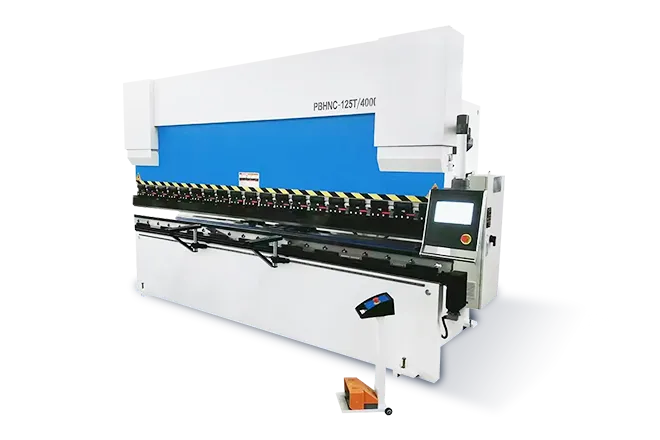
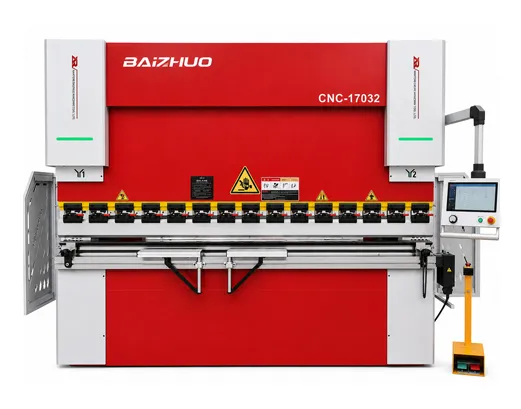
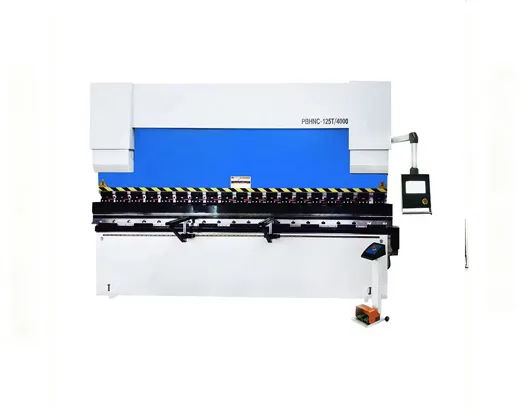
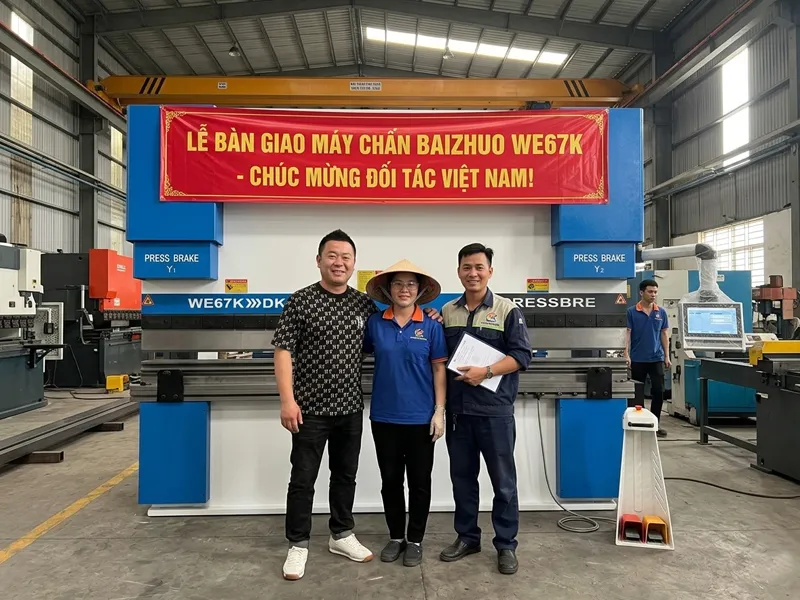
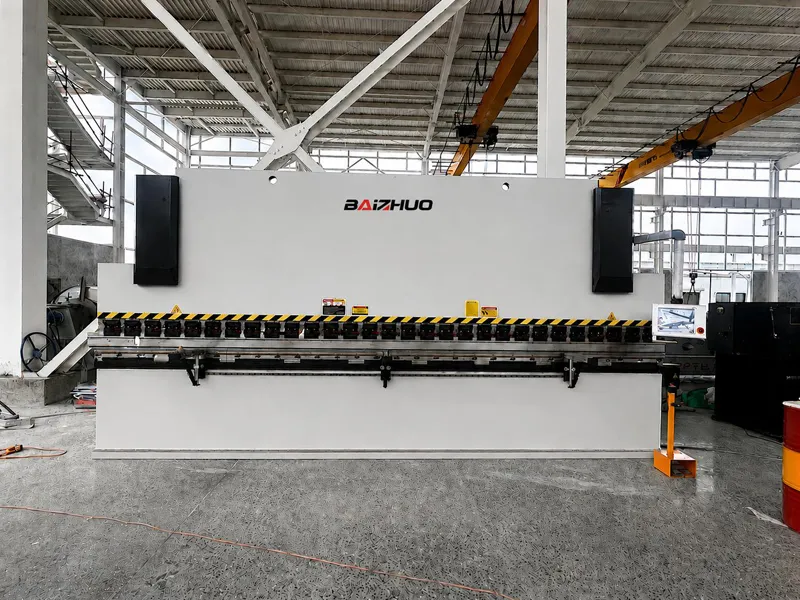
A press brake is a machine tool used in sheet metal fabrication to bend metal sheets and plates into precise angles and shapes through controlled force between a punch and die. By applying pressure along a straight bending line, a press brake transforms flat metal sheets into functional components such as brackets, panels, housings, frames and structural parts.
As manufacturing industries demand higher accuracy, shorter production cycles and greater flexibility, modern CNC press brakes have become essential equipment for industries including automotive, elevators, construction machinery, electrical cabinets, renewable energy and general metal fabrication.
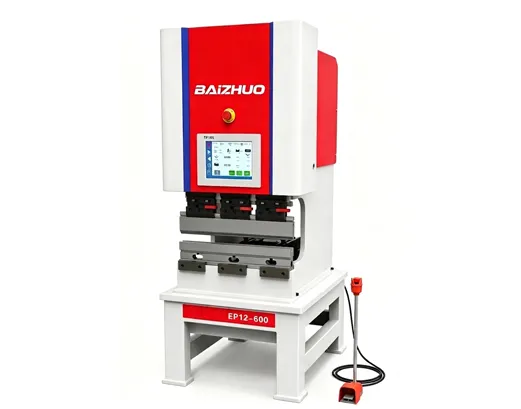
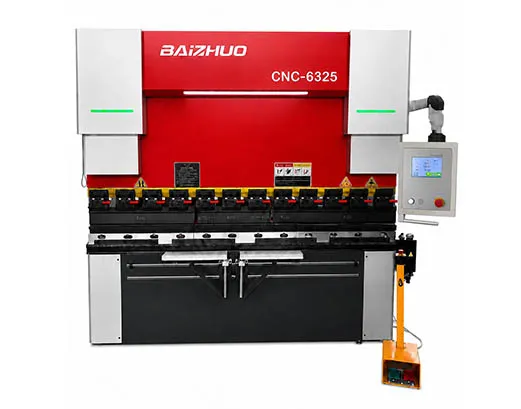
Baizhuo CNC provides a range of hydraulic press brakes, CNC press brakes and multi-axis bending solutions designed for different production requirements, including standard fabrication, complex multi-bend components and customized sheet metal processing applications.
What Is a Press Brake Machine?
A press brake, also called a brake press or sheet metal bending machine, is a specialized machine that uses a punch and die system to permanently deform metal sheets without removing material.
During the bending process, the workpiece is positioned between the upper tool (punch) and lower tool (die). The ram moves downward and applies controlled force, causing the sheet metal to form a specific angle according to the programmed parameters.
Unlike cutting machines that remove material, a press brake changes the shape of the workpiece while maintaining its original material structure. This makes it widely used for producing strong, lightweight and accurate metal components.
Modern press brakes are mainly classified according to their drive and control systems:
| Type | Main Feature | Typical Applications |
|---|
| Hydraulic Press Brake | High force capacity and stable operation | Heavy fabrication, structural parts, general production |
| CNC Press Brake | Programmable control and high repeatability | Complex parts and repeated production |
| Electric Press Brake | Servo-driven operation and energy efficiency | Precision sheet metal fabrication |
| Hybrid Press Brake | Combines hydraulic force with advanced control | Flexible production environments |
For example, Baizhuo’s WC67K and WE67K series include hydraulic and CNC hydraulic configurations, supporting different tonnage levels, working lengths and control options.
Main Parts of a Press Brake Machine
Understanding the main components of a press brake helps buyers evaluate machine performance and long-term reliability.
Frame
The frame is the foundation of the press brake. It supports the bending force generated during operation and directly affects machine rigidity and accuracy.
A stronger frame design helps reduce deformation during heavy bending, especially when processing long plates or high-strength materials.
Ram (Upper Beam)
The ram is the moving part that carries the upper punch. In hydraulic press brakes, hydraulic cylinders drive the ram movement, while servo-electric models use electric drive systems. The accuracy of ram movement directly influences bending consistency and repeatability.
Bed and Lower Die System
The bed supports the lower die and receives the bending force from the workpiece. Many modern CNC press brakes include mechanical or hydraulic crowning systems to compensate for deflection across the working length, helping maintain consistent bending angles on longer parts.
Hydraulic System
The hydraulic system provides controlled force for hydraulic press brakes. It usually includes:
Hydraulic cylinders
Pumps
Valves
Oil tanks
Control components
A well-designed hydraulic system ensures smooth movement, stable pressure and reliable operation.
Back Gauge System
The back gauge positions the sheet metal before bending. Basic machines may use a single-axis back gauge, while advanced CNC press brakes can include multiple axes such as:
X-axis for sheet positioning
R-axis for height adjustment
Z-axis for finger movement
Multi-axis back gauges improve efficiency when producing complex components with multiple flange dimensions.
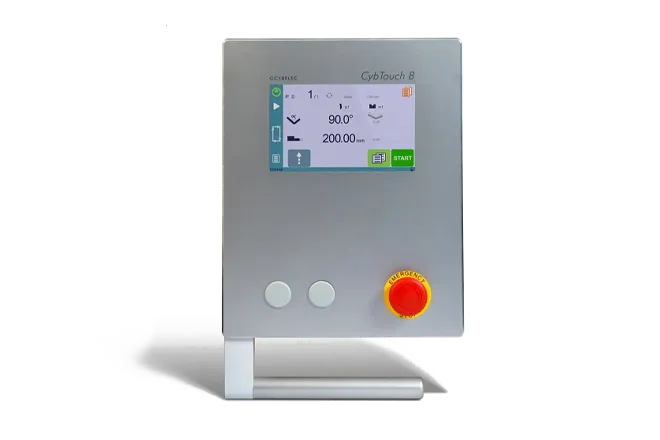
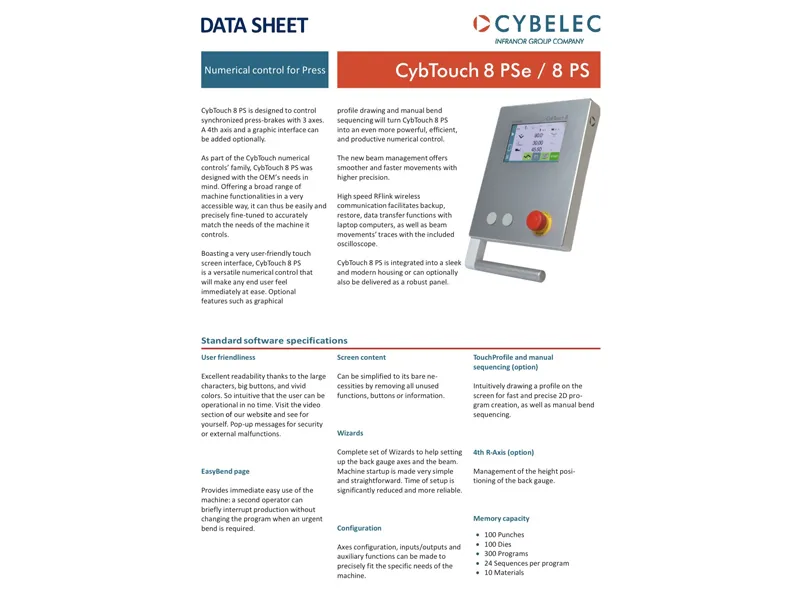
CNC Controller
The CNC controller is the “brain” of a modern press brake. It controls:
Bending programs
Ram position
Back gauge movement
Bending sequence
Compensation settings
Popular industrial controllers include Delem, Cybelec and other CNC systems.
Baizhuo CNC offers press brake configurations with different controller options, allowing customers to select solutions according to production complexity and operator requirements.
Tooling System
The punch and die determine the final bending shape. Common tooling includes:
V dies
Gooseneck punches
Radius tooling
Segmented tooling
Correct tooling selection affects bending force, surface quality, angle accuracy and production efficiency.
How Does a Press Brake Work?
The working principle of a press brake is based on controlled plastic deformation. The typical bending process includes several steps:
1. Material Positioning
The operator places the sheet metal against the back gauge to establish the bending reference point.
In CNC machines, the controller automatically positions the back gauge according to the programmed dimensions.
2. Punch and Die Bending
The ram moves downward and pushes the punch into the die opening.
The material bends around the punch radius and forms the required angle.
3. Angle Correction and Compensation
During bending, factors such as material thickness, tensile strength and springback can influence the final angle.
CNC systems use programmed parameters and compensation functions to improve repeatability.
Baizhuo CNC press brakes can be configured with electro-hydraulic synchronization and CNC systems to support stable multi-bend production.
Common Press Brake Forming Methods
Different applications require different bending methods.
Air Bending
Air bending is the most common method used in modern sheet metal fabrication.
The punch presses the sheet into the V-die without fully contacting the bottom of the die. The final angle is controlled by ram depth.
Advantages include:
It is widely used for prototype production and general fabrication.
Bottom Bending
Bottom bending forces the material closer to the shape of the die.
Compared with air bending, it provides improved angle consistency but requires more precise tooling and higher force.
Coining
Coining applies very high pressure to force the material into close contact with the tooling.
It can reduce springback but requires significantly higher tonnage, making it suitable only for specific precision applications.
Typical Applications of Press Brake Machines
Press brakes are widely used across many manufacturing industries.
Automotive: Body panels, chassis brackets, and structural parts.
New Energy: Solar mounting systems, wind turbine components, and battery enclosures.
Construction Machinery & Elevators: Heavy equipment housings, elevator cabins, and doors.
Home Appliances & Electrical: Refrigerator panels, HVAC ducts, switchgear enclosures.
Steel Processing & Curtain Walls: Architectural metal components and decorative elements.
Baizhuo machines have supported over 1,000 projects in 20+ countries, with repeat orders from stainless steel fabricators and elevator manufacturers highlighting their durability and precision.
How to Select the Right Press Brake?
Choosing the right press brake starts with understanding your material, thickness range, part size, and target accuracy. Tonnage capacity should match the toughest job you expect to run, not just your most common part. The working length must also fit your largest sheet size without limiting future production needs.
You should also evaluate control system usability, tooling compatibility, back gauge accuracy, and machine rigidity. For B2B buyers, after-sales support, spare parts availability, and customization capability are equally important. If your factory focuses on repeat production, a CNC press brake with stable performance and simple programming can reduce labor costs and improve throughput. Baizhuo’s press brake solutions are designed with industrial users in mind, helping manufacturers balance bending precision, efficiency, and long-term reliability.
Frequently Asked Questions
What is the difference between a press brake and a bending machine?
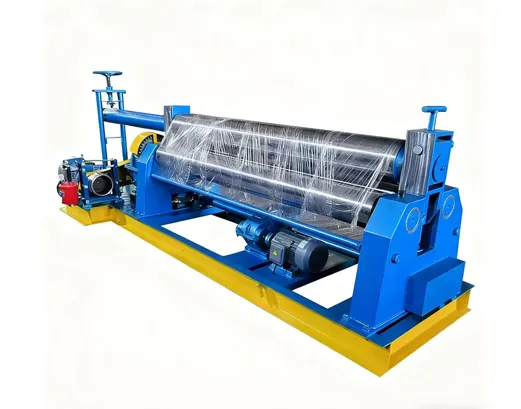
A press brake is a specific type of bending machine designed mainly for sheet metal bending using punch and die tooling. The term “bending machine” can also include other equipment such as tube benders and roll bending machines.
What are the main types of press brakes?
The main types include hydraulic press brakes, CNC press brakes, electric press brakes and hybrid models. CNC refers mainly to the control system rather than the drive method.
How do I calculate the required press brake tonnage?
Required tonnage depends on material strength, thickness, bending length, die opening and bending method. Manufacturers usually calculate the recommended capacity based on actual part drawings.
Why choose a CNC press brake instead of a conventional machine?
A CNC press brake provides better repeatability, faster setup, easier program storage and improved efficiency for complex or repeated production.
What industries use press brakes?
Press brakes are commonly used in automotive, elevators, construction machinery, electrical cabinets, renewable energy equipment and general sheet metal fabrication.
Conclusion
Press brakes continue to advance with smarter controls, greater energy efficiency, and automation integration. When selecting a press brake machine, manufacturers should consider bending force, working length, CNC capability, tooling requirements and long-term supplier support. Investing in a high-quality solution like a Baizhuo CNC press brake enhances current capabilities while preparing your operation for future demands in precision sheet metal fabrication.
Contact Baizhuo today for expert guidance, custom configurations, and reliable sheet metal forming solutions that drive your business forward.

 English