In the modern metal processing field, selecting the right cutting technology is crucial for optimizing cost, speed, and material utilization. For enterprises looking to enhance their production lines, the choice usually boils down to two main methods: the classic CNC shearing machine and the advanced laser cutting system. Both can provide precise results, but they serve different needs.
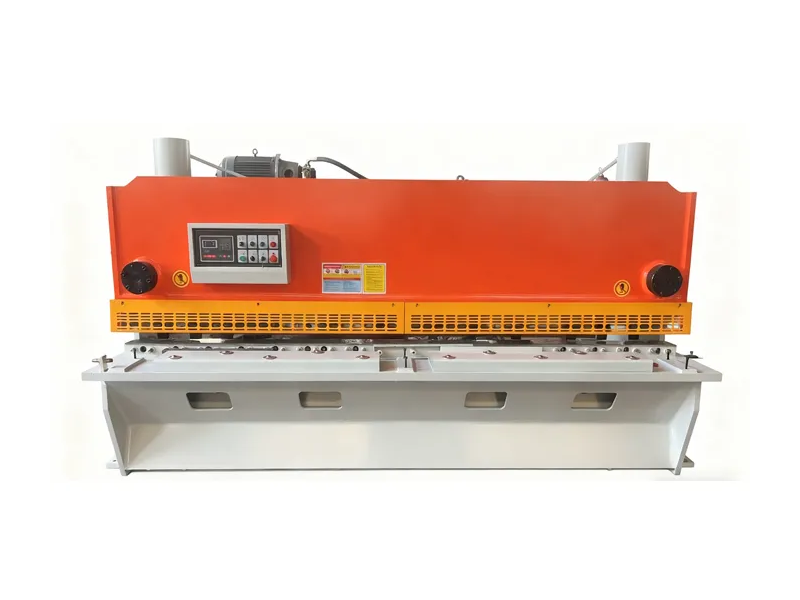
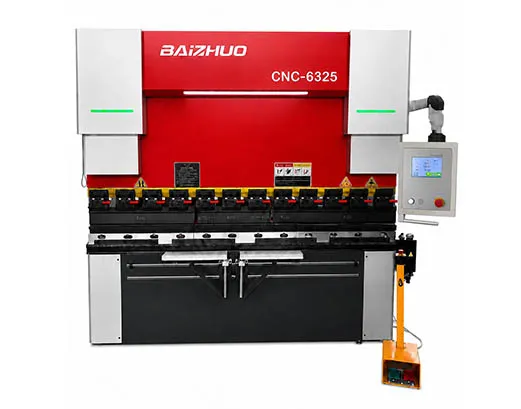
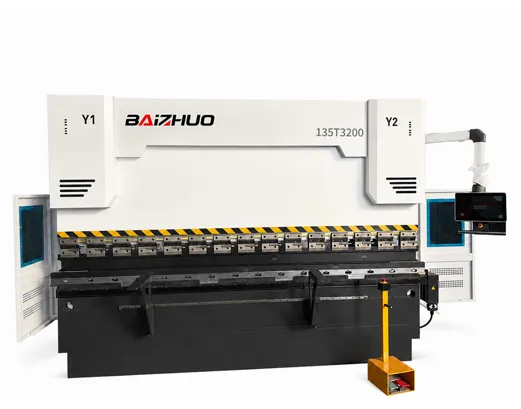
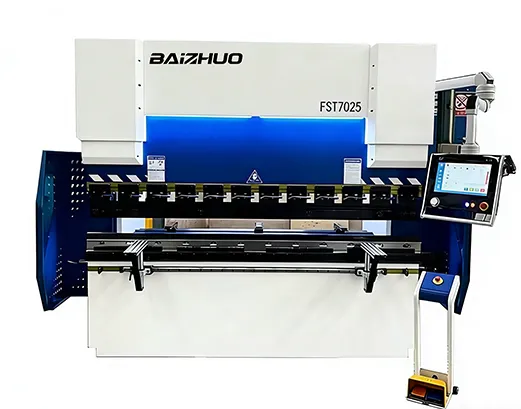
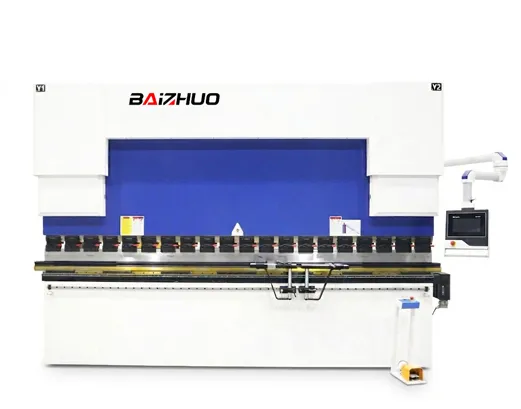
Core Functions of the Baizhuo CNC Shearing Machine
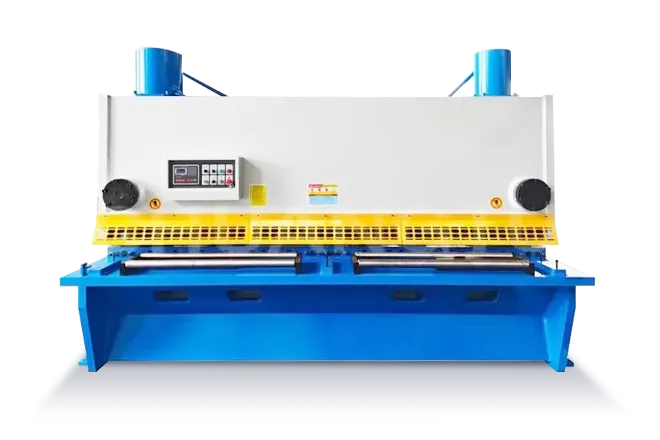
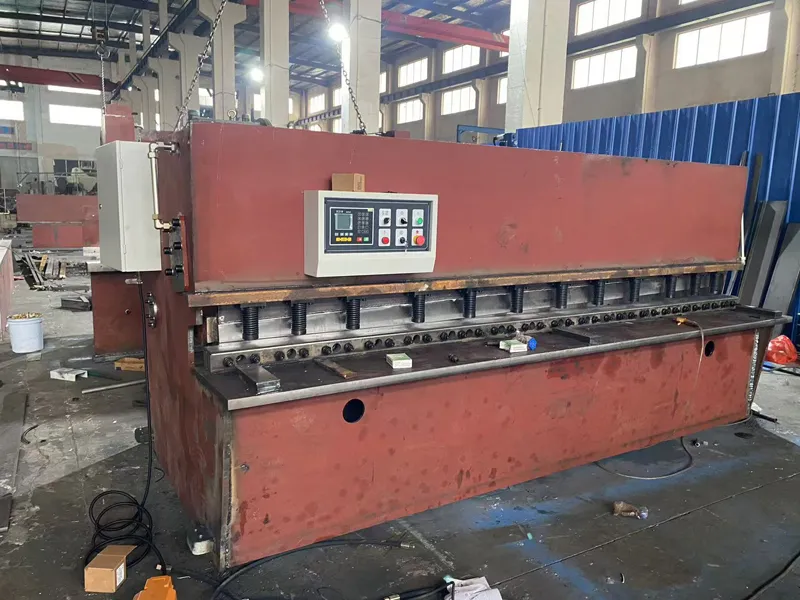
The CNC shearing machine, also known as an electric shear or guillotine, operates on a simple principle: an upper blade moves past a fixed lower blade, applying tremendous force to cut material along a straight line. This process is fast, requires minimal energy for each cut, and almost no material is lost. The main advantages:
Speed: Extremely fast for linear cutting and blanking.
Cost-effectiveness: Low initial investment and minimal operating costs.
Edge quality: CNC shearing machine provides clean, smooth, and square edges, often requiring no secondary finishing.
Laser Cutting: Precision and Versatility but Higher Costs
Laser cutting technology uses a high-power, focused laser beam, guided by a CNC system, to melt, burn, or vaporize material along its path. This process offers unparalleled flexibility and precision for complex geometries. The main advantages:
Versatility: Capable of cutting nearly any 2D shape, holes, and intricate patterns.
Tolerances: Achieves extremely tight dimensional tolerances.
Material range: Excels in handling various materials and thicknesses, often including non-metals.
Operating Costs: Investing in the Baizhuo CNC Shearing Machine
Operating expenses are a major factor when making capital investments. For high-volume jobs requiring rectangular or square sheets, CNC shearing machines often offer excellent long-term returns on investment.
| Feature | CNC Shearing Machine | Laser Cutting Machine |
| Initial Cost | Lower | Higher |
| Operating Cost | Low (low power consumption/no gas required) | High (gas, high power consumption) |
| Maintenance Cost | Lower (blade sharpening) | Higher (optical components, resonators, consumables) |
| Speed (linear cutting) | Faster | Slower |
When to Choose the Baizhuo CNC Shearing Machine
Choose a CNC shearing machine if the following conditions are met:
Your projects require mass production of rectangular or square metal sheets.
Your priority is to minimize the cost per cut and maintain a low operating budget.
You work mainly with sheet materials (steel, aluminum) and need clean, straight edges without a heat-affected zone.
Choose a laser cutting machine if the following conditions are met:
You need to cut complex, custom, or highly detailed shapes and designs.
You are dealing with a variety of materials (e.g., plastics, stainless steel, acrylic).
The dimensional accuracy of small features and holes is your most critical requirement.

 English