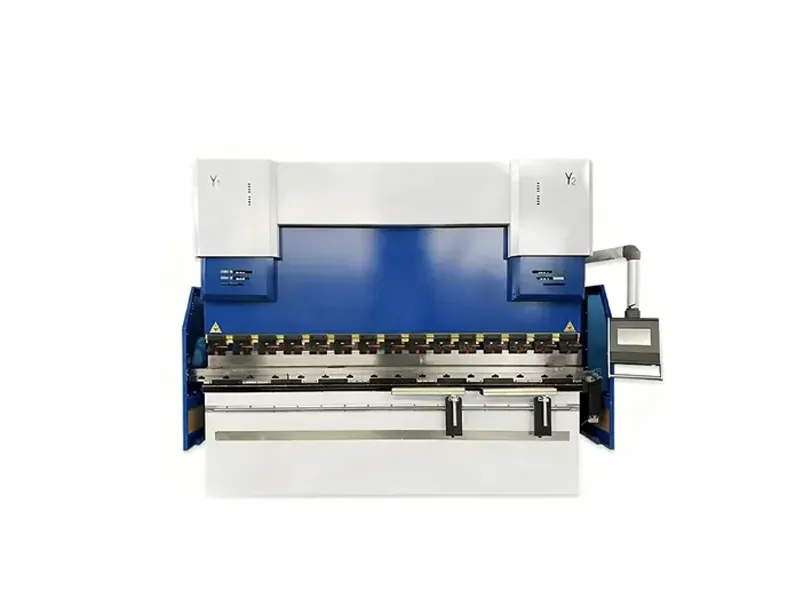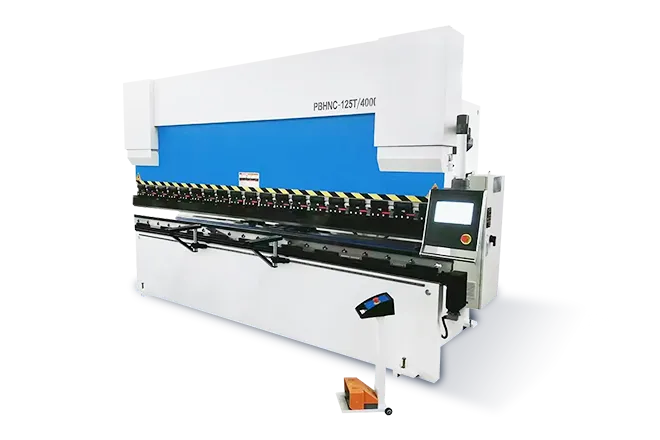
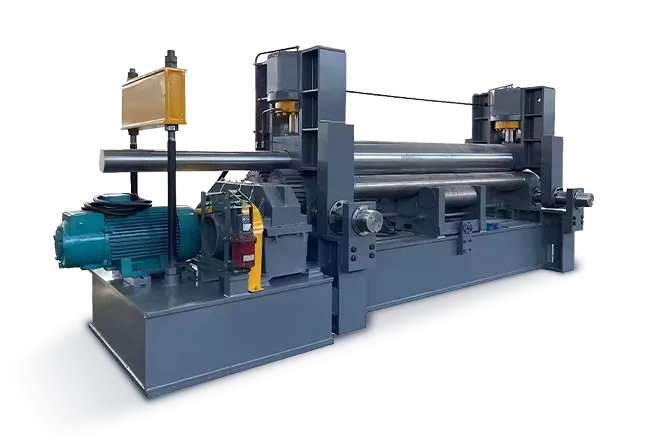

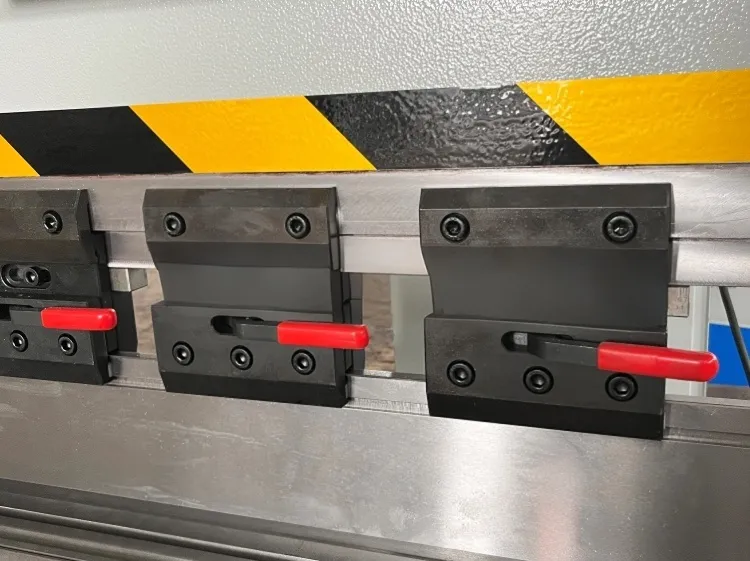

Hydraulic compensation enables the bulging adjustment of the neutral plate by controlling the relative displacement between the front, middle, and rear vertical plates. As a result, the compensation amount remains adjustable within the elastic range of the workbench, ensuring precision and flexibility.
During the bending process, both the slider and the workbench undergo deformation due to stress. To counteract this, the machine tool employs a workbench with a compensation cylinder system (mechanical compensation structure), which significantly enhances bending accuracy.
This compensation mechanism ensures precise deformation adjustment of the slider, making the machine particularly suitable for processing high-precision stainless steel sheets and other demanding applications.
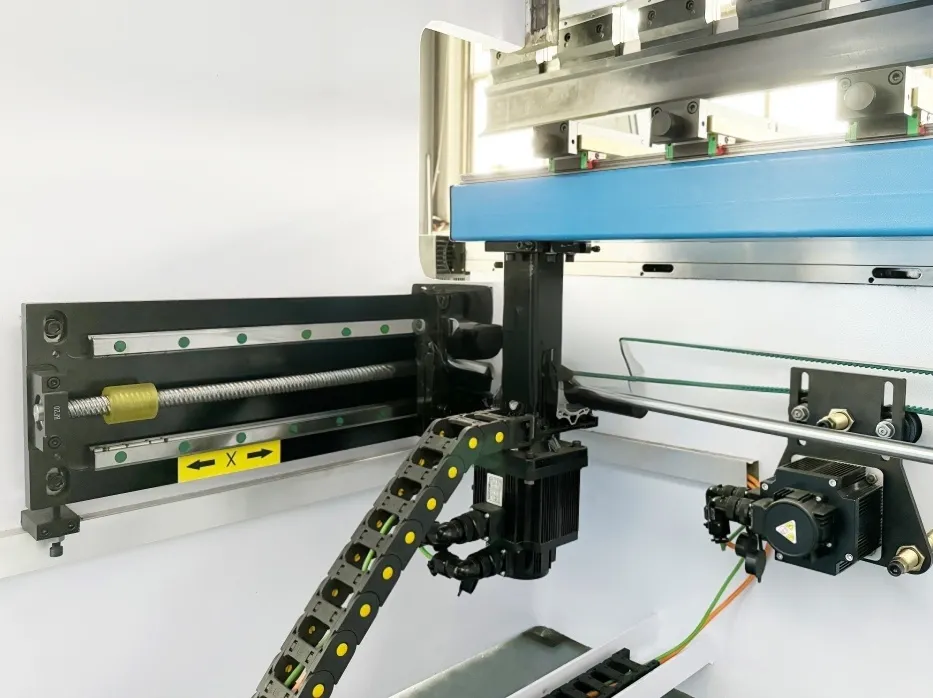
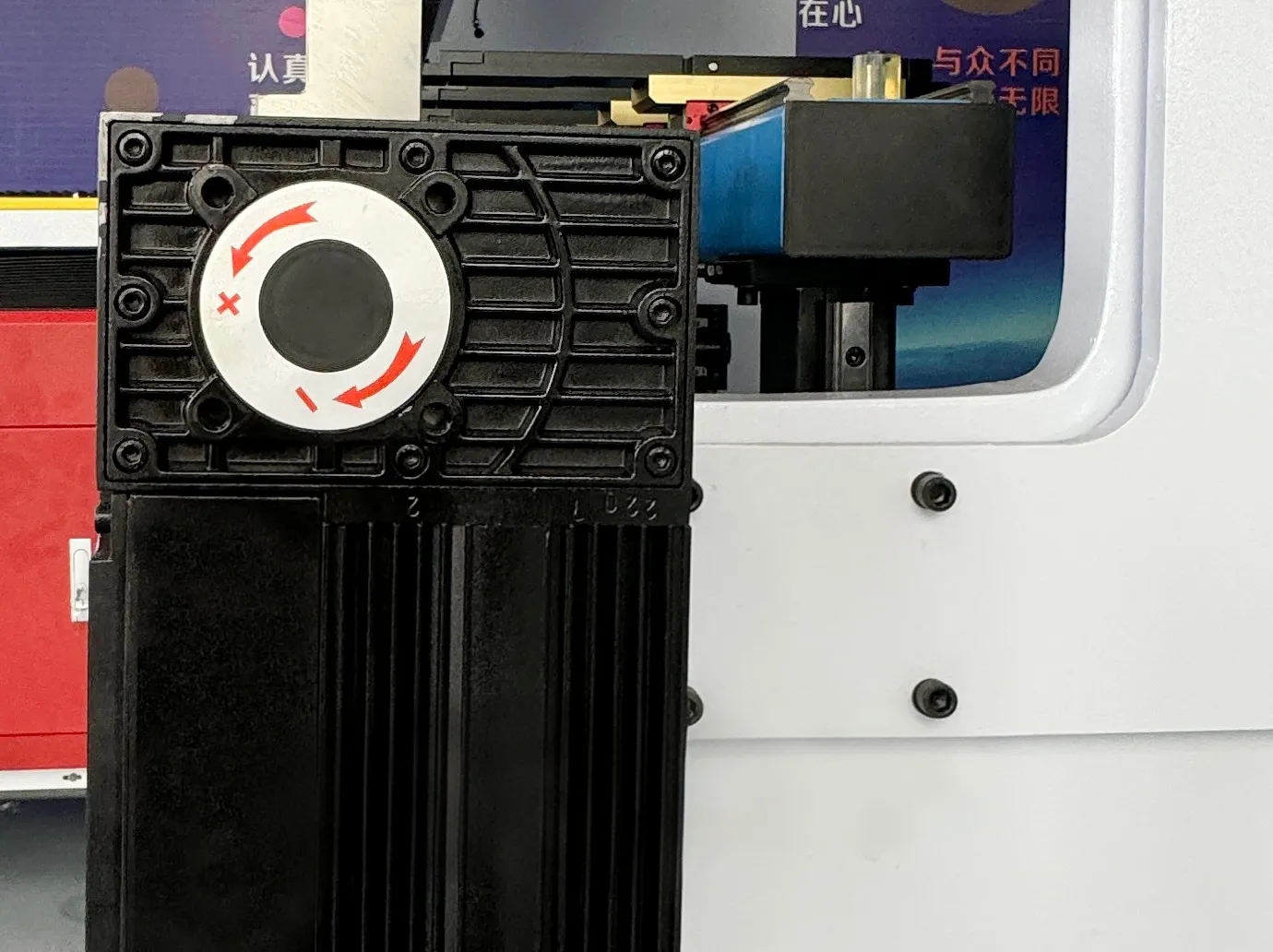
Mechanical compensation is automatically controlled by a numerical control system. Through precise motor-driven adjustments, it ensures flexible and accurate deformation compensation.
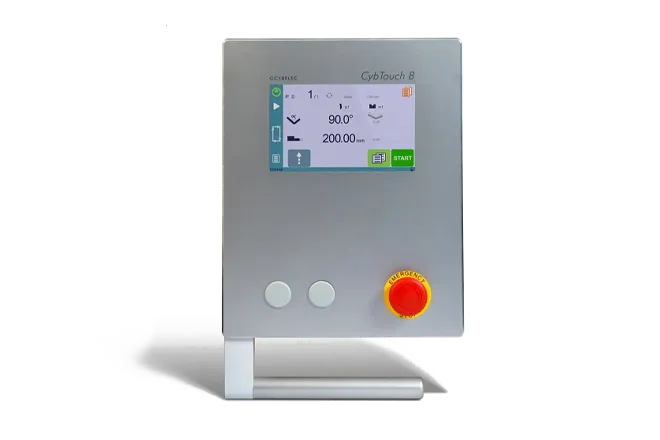
The system utilizes high-precision displacement sensors for real-time feedback, enabling ultra-precise control of compensation. As a result, the display provides exceptional accuracy throughout the bending process.