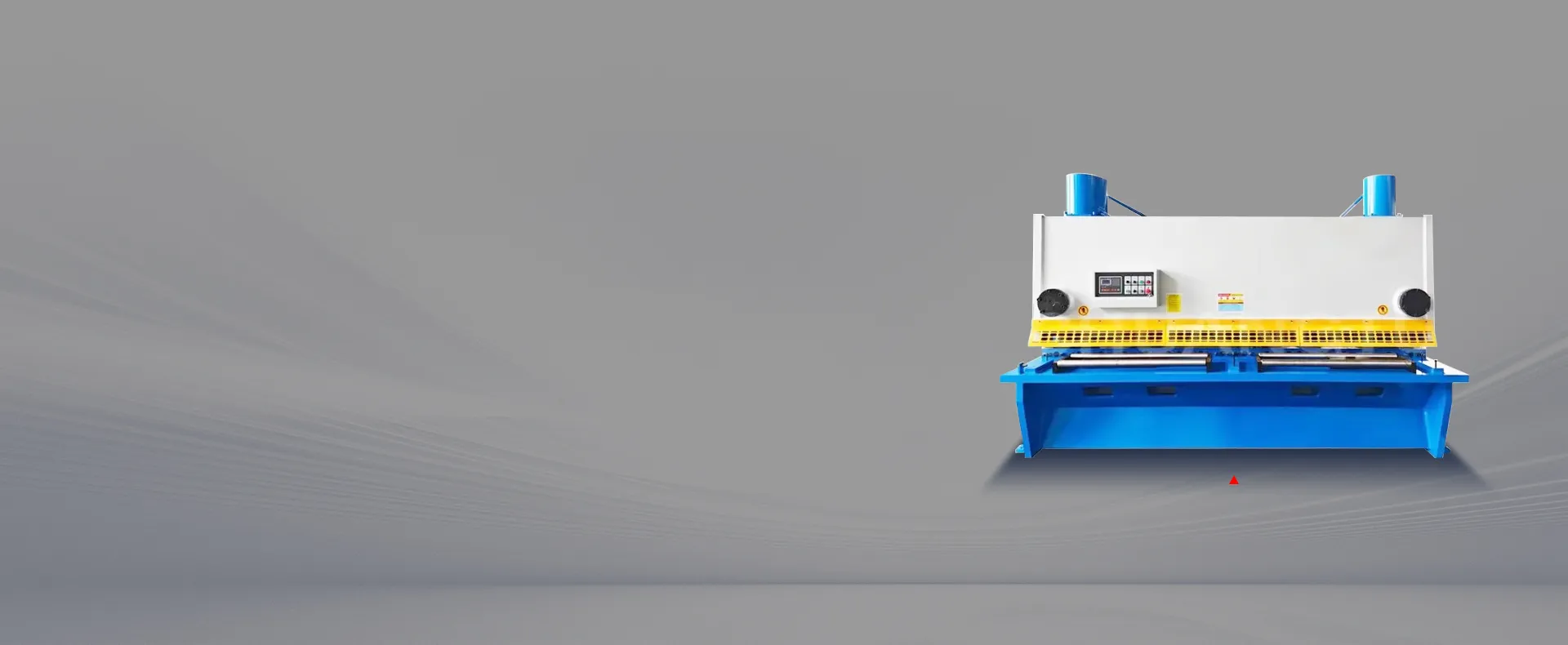
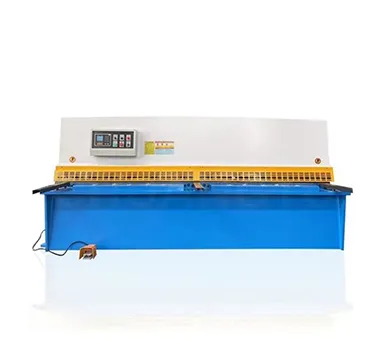
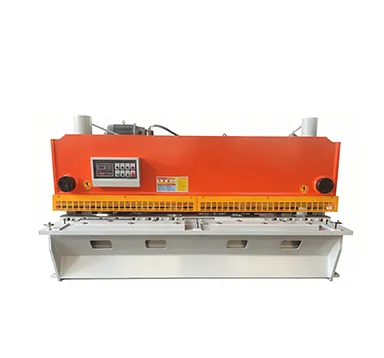
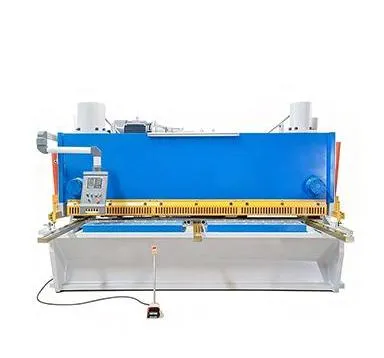
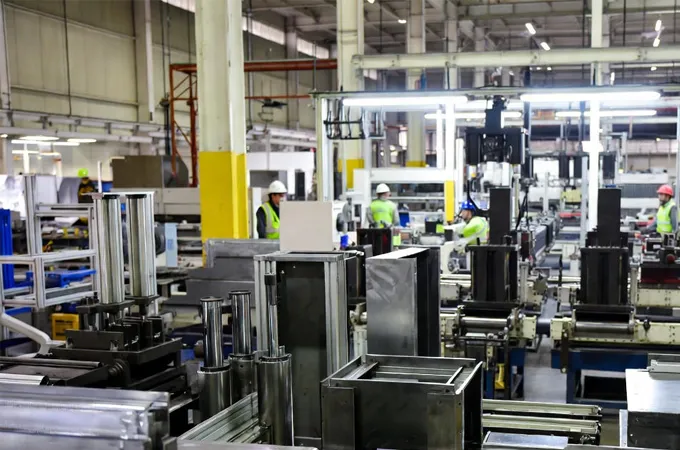
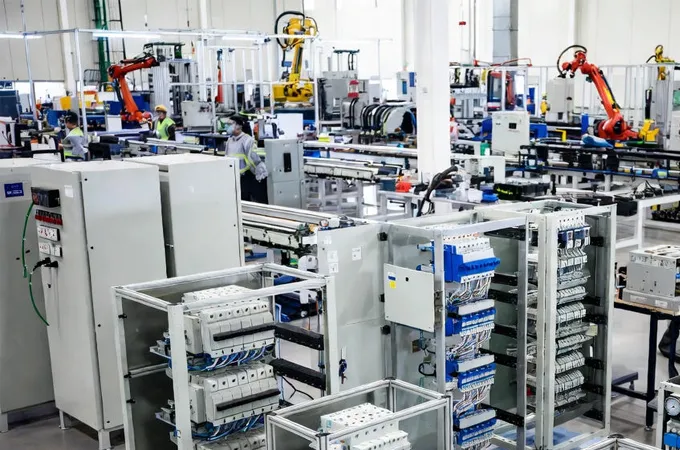
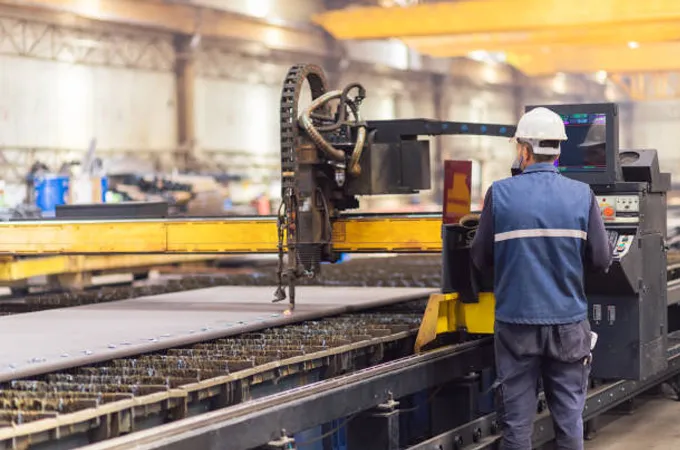
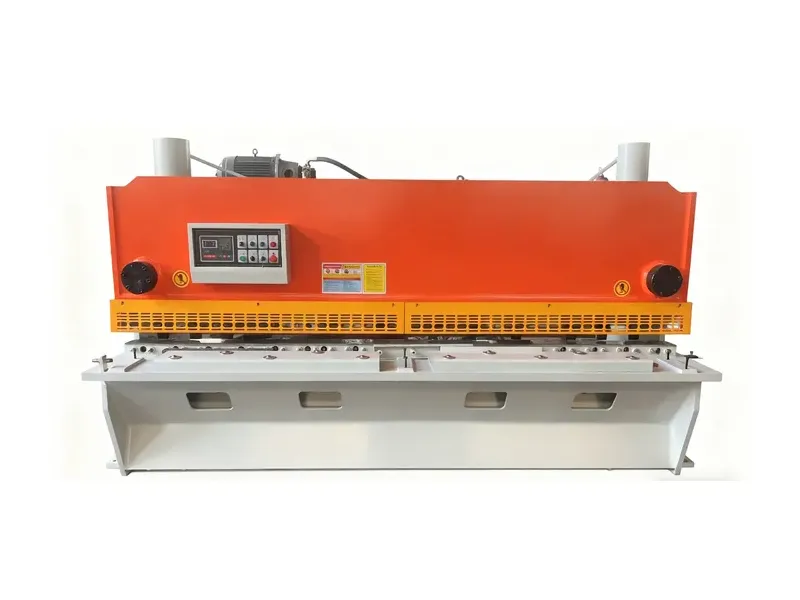
Heavy-duty metal shearing machine, precise cutting of steel plates/sheets, reliable performance for construction and sheet metal production industries.
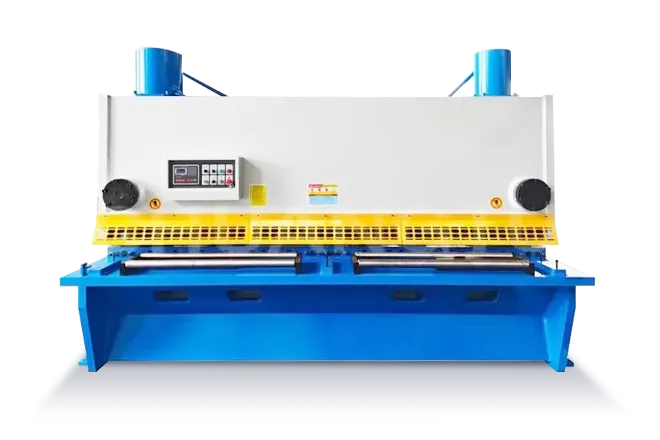
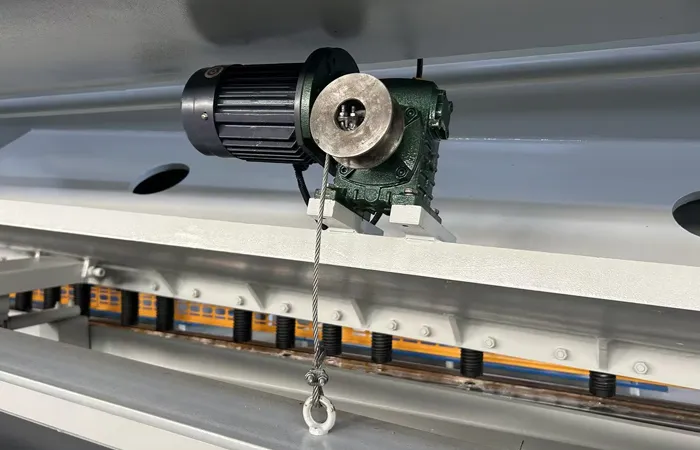
The shearing machine precisely cuts metal plates to the desired size through a moving blade that moves up and down. The speed of the blade can be controlled via electrical elements, ensuring accurate cuts.
This machine is capable of cutting a wide range of materials, including stainless steel, aluminium, copper, and other types of plates. It is user-friendly and safe, requiring only a basic understanding of its operation for successful use.
The shearing machine also has safety features that protect both the plates and workers from external forces.
The machine operates using two primary blades: a stationary lower blade fixed to the bed and a movable upper blade. As the upper blade descends—driven by hydraulic or mechanical force—it creates a concentrated stress point. This action is similar to a pair of heavy-duty industrial scissors designed for thick metal.
When the upper blade contacts the metal, the material initially undergoes elastic deformation, followed by plastic deformation. As the blade penetrates further (typically 1/3 of the thickness), the stress exceeds the material's shear strength, causing micro-cracks to form and meet, resulting in a complete fracture.
"Blade gap" or clearance is the tiny perpendicular distance between the two blades. Proper clearance—usually 5-10% of the material thickness—is critical. If the gap is too small, friction increases blade wear; if it is too large, the metal will "pull" between the blades, creating excessive burrs.
Most machines utilize a rake angle, where the upper blade is slightly tilted from left to right. This ensures that only a small section of the blade engages the material at any given time. This design significantly reduces the total force required to cut through long or thick metal plates.